
Article
A Q&A with Embleema and Astoriom CEOs on the future of dynamic sample management
Across the life sciences industry, underutilization of biospecimens is widely recognized as a persistent challenge. Industry reports note that globally only about 10% of stored samples are ever used — not because the samples lack scientific or clinical value but because sponsors often don’t have the processes, consent clarity, or technology infrastructure to reuse them (Biobanking.com, “Challenges in Biobanking: Underutilization of Samples”).
At the same time, sample storage is under growing pressure to ensure secure tracking and auditability, and align their operations with industry expectations around continuous communication throughout the consent and data lifecycle. They also face increasing responsibility for the long-term protection of samples: managing collections, maintaining integrity, quality, environmental conditions and ensuring that every registered sample can be retrieved, validated and reported on at any time during its lifecycle.
Sponsors want flexibility and ease of access to their biospecimens for research and testing. Collection agencies want smarter inventory management. And the ecosystem as a whole is pushing toward technology-enabled governance.
Amid this backdrop, Embleema and Astoriom are partnering to bring to life science organizations a truly end-to-end, flexible, compliance-driven solution for sample receipt and accessioning, consent management, clinical and genomic data characterization, and long-term temperature-controlled sample storage, meeting FDA, ISO 9001 and CAP expectations. This partnership not only brings together inventory tools for better asset utilization but a platform for consent management, patient registries, and EHR data integration which scales the specimen associated meta-genomic data collection and sharing.
The CEOs of Embleema and Astoriom, Rob Chu and Lori Ball respectively, share their perspective on the problems the industry is wrestling with — and why this partnership is so relevant today.
How is dynamic consent evolving, and why does it matter now?
Could expired or unconsented samples ever be reclassified ethically?
What makes this combined approach different from today’s CRO models?
You’ve mentioned "smarter inventory.” What do you mean by that?
What does the future of sample management look like for sponsors?
Q&A With Embleema and Astoriom Leadership
Q1. Why are biospecimen reuse rates so low today?
Lori Ball, Astoriom CEO:
Most sponsors collect tens of thousands of samples during clinical trials — and then don't reuse them. The biggest bottleneck is consent. Sponsors are limited to whatever was checked on the informed consent form at the site, often years earlier. Once the trial ends, they typically don’t have an easy way to return to participants to get re-consent for new uses.
We also see other operational barriers: incomplete data, inconsistent labelling, and a lack of clarity around whether samples can be retained post-trial. Without clear consent governance, we can’t ethically release or even securely classify many samples for secondary research.
Rob Chu, Embleema CEO:
Exactly. Sponsors are increasingly asking: “Can I ethically reuse these samples? What do my consents actually allow?” But without a technology layer that gives them full visibility into consent terms — and the ability to seek consent again — they’re stuck. That’s part of what brought us together.
Q2. What are sponsors telling you about the challenges they face with consent governance?
Lori, Astoriom
We’re hearing these questions constantly in audit questionnaires:
“How are consents managed?”
“Is the biorepository blinded from PHI and clinical data?”
“Can you show end-to-end chain of custody with secure tracking and auditability?”
It’s becoming a huge pressure point. We can’t collect, store, or retrieve samples unless we know the consents and data governance are airtight. That’s why a blinded, external consent platform — like Embleema’s — is so important to our clients.
And from a biorepository operations point of view, sponsors are increasingly demanding evidence of metadata completeness, temperature stability conditions, and real-time location traceability. Consent governance and sample governance are inseparable, if one is unclear, the whole chain breaks.
Rob, Embleema
Our consent portal is completely blinded to Astoriom, which is critical in their field. Pharma sponsors can send their samples to you, and all identifying data and clinical context stay inside Embleema’s platform — not the biorepository network. That immediately answers several of those audit questions.
Q3. The industry is talking more about “dynamic consent” and how it could unlock sample reuse. How do you see this evolving?
Rob, Embleema
Dynamic consent is the heart of the transformation. Today, the industry is in Phase 1 — understanding what the original consents say and what can be done under them. The market is here now.
But to enable real reuse, the system has to go further and provide:
End-to-end metadata for sample processing, receipt and storage
Fit-for-purpose consent models aligned with the ICH E6(R3) Quality by Design framework (2025)
Regulatory standards — including the Declaration of Taipei (2016) and GDPR in Europe (2018) — both reinforce the shift toward transparent and dynamic consent, stronger participant rights, and continuous communication
Full visibility into the sample’s history
The ability to return to participants for additional permissions
This is where sponsors start to ask: “If a consent has expired, and we can prove it, can a sample be reclassified as a remnant instead of being destroyed?”
It’s provocative — but the industry is already exploring it. Lori Ball’s whitepaper on the state of biobanking raises these questions directly. And sponsors are starting to rethink whether it’s ethical to not reuse the 90% of samples just sitting in storage.
Lori, Astoriom
International guidance has been moving in this direction for more than a decade. Publications such as Kiehntopf & Krawczak (2011), Wolf et al. (2012), and the updated Medical Genetics and Law biobanking chapter (Crouch, 2025) all describe consent frameworks that anticipate broader research use of samples, and the conditions under which de-identified or anonymized material may be used under a consent waiver. These legal and ethical models support a future where sample utilization, sharing, sustainability, and cost recovery are strengthened when governance requirements are met.
As biobanking matures, the opportunity is to adopt tools that clearly define the collection criteria and sample attributes upfront, enabling responsible reuse instead of automatic discard. We already see examples like the National Cancer Institute’s Specimen Resource Locator, which helps researchers locate samples that could be needed for their investigational use that might otherwise remain unused. And for end-of-life clinical samples, de-identification can allow repository managers to make high-quality material available to disease-focused researchers, provided repositories maintain integrity standards and sponsors comply with consent management expectations.
This is where partnerships like ours matter. Together, Astoriom and Embleema give sponsors the ability to manage collection and understand their inventory, while combining patient and site apps with genomic, clinical, and self-reported data that can be anonymized for future use.
For readers looking for a practical overview of storage conditions across all biologic and diagnostic sample types, our Sample Storage Guide offers a clear framework for selecting and validating the right environment throughout the sample lifecycle.
Q4. Is there really a world where samples could be reclassified and reused ethically and compliantly?
Lori, Astoriom
That’s exactly the conversation our clients want to have. When a study ends and a participant didn’t give consent for future use — or consent has expired — there’s uncertainty. And for biorepositories, that uncertainty begins at the point of receipt; we can only store, retrieve or release samples when the consent is unambiguous. But with secure tracking and auditability in place, you can maintain continuous communication and clearly demonstrate when consent expires. That clarity opens the door to responsible reclassification.
From a sample storage perspective, we must be able to prove uninterrupted temperature history, full traceability and compliance before a sample can even be considered for reclassification, otherwise it cannot meet ethical or scientific standards for the future.
Rob, Embleema
This is a huge point. If our technology can show definitively that the patient identifiers are severed and consents have expired, then sponsors can evaluate whether those samples meet criteria for remnant status — without a shred of doubt.
This isn’t about bending rules. It’s about clarity. The more clarity you give sponsors, the more value they can ethically get from their existing collections.
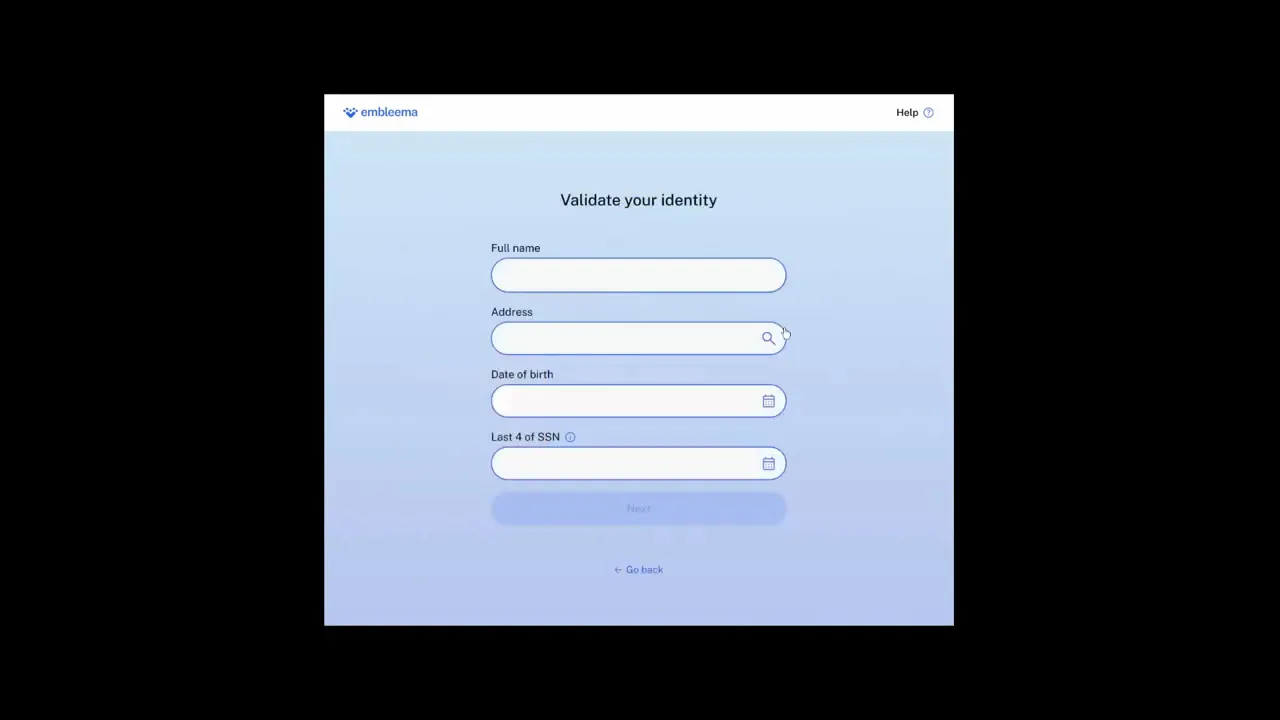
See the re-contact and re-use flow in action
Q5. What inspired this partnership between Embleema and Astoriom?
Lori, Astoriom
Our clients kept asking us:
“How do we manage consent?”
“How do we stay blinded while still getting rich clinical data characterization?”
We needed a best-in-class consent and data management partner — and Embleema was the obvious choice. The Embleema platform manages the clinical data, genomic information, medications,and the data associated with the samples we receive — all blinded from us — and the sponsors get a single, secure system that covers everything.
At the same time, it’s a reality for the lifescience industry that organizations are looking for partners who can support the full lifecycle: from sample receipt and accessioning, to controlled long-term storage, to retrieval for sequencing or secondary analytics. So, Embleema helps us support our customers with an integrated solution.
Rob, Embleema
And on the Embleema side, we needed a trusted biorepository partner we could confidently send sponsors to. When we capture the data, context, and consent, Astoriom provides the storage, retrieval, and end-to-end sample management that complements our strengths.
For sponsors, this replaces the need to go to a large CRO and commit to a large CRO-scale budget. It’s flexible, customizable, and purpose-built.
Q6. What makes your combined offering different from what sponsors can get today?
Rob, Embleema
Our joint value is in being truly end-to-end:
Sample receipt and accessioning
Clinical and patient data collection, both from investigational sites and direct from patients
Patient surveys
Sample characterization with genotype and phenotype
Comprehensive consent management for sample reuse, including the ability to reconsent remotely
Storage and retrieval
Reporting and result management
Inventory and packaging workflows
Most sponsors struggle to get all of this unless they hire a large CRO — which is expensive, rigid, and not tailored for post-trial sample governance, and they won’t be able to reconsent for secondary uses of the samples.
Lori, Astoriom
What we’re hearing is that sponsors want flexibility and custom approaches. They don’t want a monolithic solution. With this partnership, they get exactly what they need. They also gain a storage partner capable of supporting multi-temperature environments (from +60C down to -196C), GxP monitoring, and global support, also offering disaster recovery protection; this ensures that all retained samples remain viable for as long as consent allows. Our joint solution covers both the ethical rights and the physical realities of long term sample management.
Q7. You’ve mentioned "smarter inventory.” What do you mean by that?
Lori, Astoriom
Biorepositories actually have two responsibilities when it comes to long-term sample stewardship:
Make sure the samples they receive are fully usable, with the right data, consent terms, storage conditions and chain of custody history.
Identifying samples that should not remain in long term storage, for example, those linked to events like protocol deviations and incomplete identifiers. With this, they could destroy the samples they “shouldn’t” keep.
If a repository holds 100,000 samples from multiple sites and studies, it’s common to discover that a significant portion should have been destroyed years earlier — adverse events, disqualifiers, expired consents. When you don’t know what you have, you store everything.
When you do know — you store fewer samples and get far more value out of what remains. That’s smarter inventory; having the governance and visibility to confidently classify samples. When this is not in place, everything gets stored indefinitely, and costs can rise unnecessarily
Rob, Embleema
Data drives better decisions. With the right sample metadata and consent clarity, sponsors can rationalize what should be retained in storage, remove what isn’t ethically usable, and focus on the samples that matter. It makes research more efficient, compliant, and cost-effective.
Q8. What does the future of sample management look like?
Rob, Embleema
It looks like a fully traceable chain of custody, complete compliance visibility, and real-time consent governance supported by end-to-end integration.
Lori, Astoriom
Exactly that—it’s all about full sample lifecycle governance: robust, validated sample management infrastructures, and the ability to move samples seamlessly between collection, sequencing, storage, retrieval and re-use. And we’re aligned with the Biosample Management Consortium on building toward exactly that — solving the journey with technology, not manual processes. That’s why this partnership is happening now.
Closing Thoughts: A More Ethical, Efficient, Flexible Future
Life sciences organizations want to use more of the samples they collect. They want clarity, compliance, and smarter inventory. Patients want their donations to accelerate science.
The industry has long accepted that 90% of samples go unused. But with modernized consent, metadata clarity, end-to-end governance, and the right partners — that doesn’t have to be the future. For this to become a reality, ethical consent must be paired with rigorous practice. Technology alone isn’t enough: samples must be stable, traceable and compliant at every stage of their life.
Embleema and Astoriom are committing to a new model: dynamic sample management that is ethical, compliant, flexible, and built for modern research.
Continue the Conversation: Follow Robert Chu and Lori Ball on LinkedIn for insights on dynamic consent, biospecimen governance, and sample management modernization.
Interested in exploring your own sample reuse potential?
Request a 20-minute personalized dynamic sample management strategy session.